Highlights
- Samsung has finally unveiled the world’s first 2 nm Exynos 2600 smartphone chip, built for future Galaxy flagships.
- Built on a 2nm GAA process with new FOWLP and Heat Path Block (HPB) tech, it promises better cooling and performance.
- It delivers big CPU, GPU, and AI gains while aiming to solve Samsung’s long‑running thermal and throttling problems.
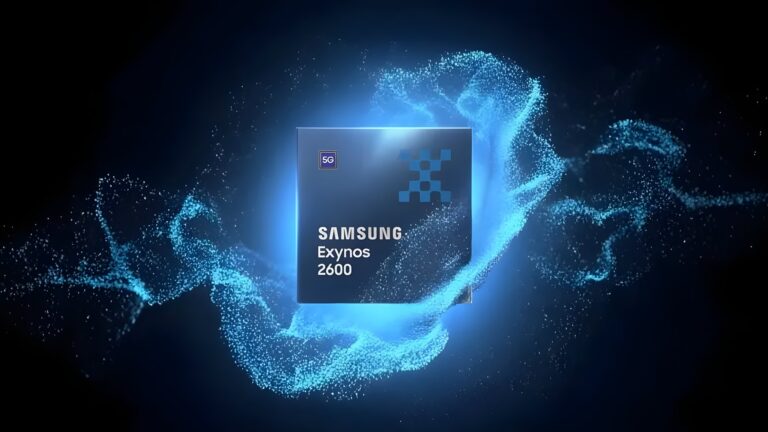
Samsung’s new Exynos 2600 is official now! Samsung has finally announced and unveiled the Exynos’ next-generation 2 nm system-on-chip (SoC). It is the world’s first 2 nm Exynos smartphone chip available.
Now the question arises, will this new SoC fix Samsung‘s long-criticized Exynos heating and throttling issues? In this article, we will discuss that in brief.
Don’t want to miss the best from TechLatest?
Set us as a preferred source in Google Search
and make sure you never miss our latest.
In the past few years, several generations of Samsung’s flagship smartphone lineups were criticized for their Exynos chips, forcing the company to opt for Qualcomm’s Snapdragon SoCs.
Read: Samsung Galaxy XR vs. Apple Vision Pro (M5) – Battle of Next-Gen Headsets
The Exynos 2600 will go neck and neck with Qualcomm’s latest Snapdragon 8 Elite Gen 5 and will first debut with the upcoming Galaxy S26 series.
Key specs & performance? Samsung has put all the fancy new top-tier hardware into the new 2 nm Exynos SoC.
The chip features a 10-core CPU layout, promising up to 39% higher CPU performance versus the last-generation Exynos 2500. The CPU uses ARM’s architecture based on the new C1 Pro and Ultra cores clocked at up to 3.8 GHz.
It is also equipped with the Xclipse 960 GPU (RDNA 3) with up to 50% graphics and ray‑tracing uplift and smoother gaming via Exynos Neural Super Sampling (ENSS) frame generation.
Furthermore, it also features a new AI/NPU with up to 113% faster performance for onboard generative AI features.

What’s new in the Cooling Department? Samsung has come up with the all-new Heat Pass Block, or HPB, cooling tech and 2nm GAA plus new FOWLP packaging in the Exynos 2600.
According to Samsung, this design is meant to cut thermal resistance and improve cooling efficiency by around 16–30% compared with previous‑generation SoCs.
The heat generated from the chipset is dissipated via the passive copper heatsink used in HPB, which re-routes the heat away from key hotspots for longer high-load sessions like gaming and AI workloads.
Read: One UI 8.5 to Bring Smarter YouTube and Spotify Suggestions via Now Brief
The new Exynos 2600 also lacks an integrated 5G modem, and Samsung positions this as a cooling advantage rather than a drawback. Even this is the first-ever SoC from Samsung without a built-in 5G modem, Bluetooth, GPS, Wi-Fi, and NFC connectivity.
All these design choices should help keep the chipset cooler in theory, but the real test will begin when we get to try it in the upcoming Galaxy S26 series and see sustained performance in real‑world use.
Enjoyed this article?
If TechLatest has helped you, consider supporting us with a one-time tip on Ko-fi. Every contribution keeps our work free and independent.
Support on Ko-fiDirectly in Your Inbox