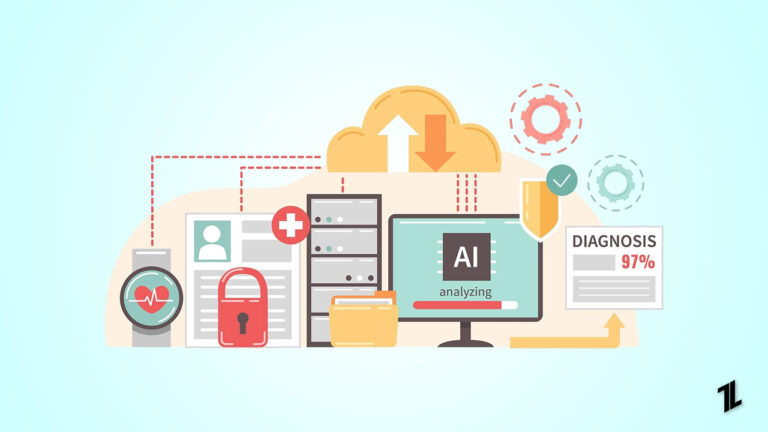
AI is gradually becoming part of everyday healthcare, from identifying patients at risk of complications to helping doctors review medical records and make treatment decisions. But using these systems in real clinical settings is not always straightforward. An AI tool might produce accurate predictions during testing and still create problems when introduced into a busy hospital.
That is why healthcare professionals need more than a basic understanding of AI technology. Doctors must know when to question automated recommendations, administrators need to consider patient safety and operational costs, and data professionals must understand how clinical information is processed.
Don’t want to miss the best from TechLatest?
Set us as a preferred source in Google Search
and make sure you never miss our latest.
Several US universities now offer programs addressing these challenges. The five courses below cover different areas of healthcare AI, including clinical applications, predictive analytics, responsible implementation, and health-system management.
5 AI in Healthcare Courses

| # | Program & Provider | Duration | Fee | Best Aligned With |
|---|---|---|---|---|
| 1 | AI and Agentic AI in Healthcare – Johns Hopkins University | 10 weeks | US$2,990 | Clinical AI, patient risk, agentic workflows |
| 2 | AI Strategy in Healthcare – Cornell University | 3 months | US$3,750 | AI adoption, vendor assessment, governance |
| 3 | AI in Health Care Systems – Harvard T.H. Chan School of Public Health | 12 weeks | US$3,200 | Deployment, health systems, responsible AI |
| 4 | Strategic AI and CX in Healthcare – Harrisburg University | 8 weeks | US$4,995 | Patient experience, operations, AI strategy |
| 5 | AI and Data Analytics for Health Systems – Meharry Medical College | 12–15 weeks | See tuition note* | Healthcare data, ML, clinical analytics |
1. AI and Agentic AI in Healthcare – Johns Hopkins University
When should a clinician trust an algorithm? Johns Hopkins’ AI in healthcare course examines predictive models, decision support, clinical documentation, and agentic workflows. Human oversight matters when software handles several tasks in sequence.
Delivery & Duration: Ten weeks online, six to eight hours weekly, with faculty masterclasses and mentorship.
Credentials: Certificate of Completion and 6 CEUs from Johns Hopkins University.
Program Highlights: The R.O.A.D. Management Framework supports AI project decisions. Participants also examine accuracy and F1 scores, LLMs, clinical risk, and agent supervision.
Hands-on Learning: Eight or more cases include AI-assisted chest X-rays and clinical documentation. An n8n masterclass covers pre-visit risk assessment.
Outcomes: Participants practice evaluating clinical AI applications and the risks of implementing them.
Why should you choose this course?
- No prior programming knowledge is required.
- Clinical cases connect model reliability with patient-care decisions.
2. AI Strategy in Healthcare – Cornell University
Before purchasing AI, hospitals must check the evidence, costs, and workflow fit. Cornell focuses on these management decisions rather than teaching participants to code models. Vendor promises and deployment problems receive scrutiny.
Delivery & Duration: Three months online, with three to five study hours weekly.
Credentials: AI Strategy in Healthcare Certificate from Cornell University.
Program Highlights: AI readiness, workflow mapping, vendor evaluation, governance, total cost of ownership, and continuous monitoring.
Practical Learning: Healthcare scenarios inform adoption and scaling plans involving staff and accountability.
Outcomes: Participants develop frameworks to assess AI proposals and monitor deployed systems.
Why should you choose this course?
- It directly addresses procurement and clinical leadership decisions.
- Governance remains important after a tool goes live.
3. AI in Health Care Systems: Deploying AI Solutions at Scale – Harvard T.H. Chan School of Public Health
A tool working in one clinic may fail across a network. Staffing, records, and patient populations complicate rollout. The harvard ai in healthcare program uses a High-Value Health Care System framework to examine effectiveness, efficiency, equity, and responsiveness before deployment decisions are made.
Delivery & Duration: Twelve weeks online, six to eight hours weekly, with masterclasses and mentorship.
Credentials: Certificate of Completion from Harvard T.H. Chan School of Public Health.
Program Highlights: Participants apply health-systems analysis to clinical workflows, compare predictive and generative AI, and examine governance, bias, and scaling.
Hands-on Learning: A capstone develops an AI intervention that addresses a care problem, regulatory requirements, and ongoing monitoring.
Outcomes: Participants prepare implementation proposals with measurable clinical and operational goals.
Why should you choose this course?
- It asks whether AI belongs in a workflow before selecting a tool.
- The capstone brings safety and implementation into one plan.

4. Strategic AI and CX in Healthcare – Harrisburg University
Not every AI project involves diagnosis. Scheduling, patient communication, and follow-up services can also affect care. Harrisburg examines AI through customer experience (CX), particularly how digital interactions change what patients and staff encounter.
Delivery & Duration: Eight weeks of self-paced online study across eight modules.
Credentials: Certificate of Completion through Harrisburg University’s professional development program.
Program Highlights: Patient journeys, AI engagement, healthcare analytics, ethical deployment, relationships, and change management.
Hands-on Learning: A CX and AI Strategies Implementation Plan adapts course concepts to an organization.
Outcomes: Participants plan improvements to patient-facing workflows while considering staff adoption.
Why should you choose this course?
- It suits administrative and patient-experience teams.
- The final plan gives service improvements a practical structure.
5. AI and Data Analytics for Health Systems Certificate – Meharry Medical College
Meharry takes a technical route. Its graduate certificate is intended for professionals who want to work with clinical datasets, statistical models, and health-system analytics. Unlike executive certificates, this program awards academic credit.
Delivery & Duration: Twelve to fifteen weeks, with live online evening classes.
Credentials: Nine-credit graduate certificate from Meharry Medical College.
Program Highlights: Technical coursework covers Python, R, SAS, SQL, data preparation, machine learning, NLP, and ethical handling of healthcare data.
Hands-on Learning: An AI lab and capstone involve health-focused data and applied tasks.
Outcomes: Learners develop skills in analyzing healthcare data and interpreting predictive models.
Why should you choose this course?
- It provides graduate-level technical study rather than broad AI orientation.
- Credits may apply toward further Meharry graduate education, subject to requirements.
Conclusion
Choosing an AI program depends largely on your professional background and the responsibilities you want to take on. Healthcare administrators may find greater value in courses covering AI adoption, governance, and operational planning.
Clinicians might prefer programs that explain clinical decision support, patient safety, and the limitations of predictive models. Professionals interested in technical roles may find training in healthcare data analysis and machine learning more relevant.
Before enrolling, look beyond the university’s reputation. Compare the curriculum, practical assignments, technical prerequisites, and type of credential awarded. A shorter certificate may be enough to understand AI applications, while advanced analytics roles often require stronger technical foundations.
The right AI in healthcare program should help you apply what you learn to real healthcare problems, whether that means evaluating a clinical tool, improving hospital operations, or working with patient data responsibly.
Enjoyed this article?
If TechLatest has helped you, consider supporting us with a one-time tip on Ko-fi. Every contribution keeps our work free and independent.
Support on Ko-fiDirectly in Your Inbox