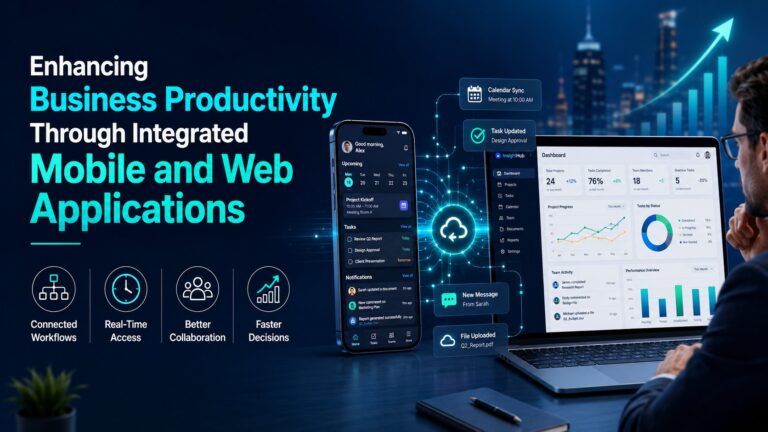
Every growing business eventually hits the same wall. The tools that worked beautifully for a team of ten begin to crack under the weight of a hundred, and leaders quickly realize that off-the-shelf software cannot keep pace with their ambitions. This is why forward-thinking companies turn to custom web application development services to build platforms shaped around their actual workflows rather than forcing workflows into generic tools.
The challenge extends beyond the desktop, too. With distributed teams and customers who expect seamless experiences on every device, pairing those platforms with custom mobile application development services has become essential for creating a unified digital ecosystem where data flows freely and work happens anywhere.
Don’t want to miss the best from TechLatest?
Set us as a preferred source in Google Search
and make sure you never miss our latest.
This is rarely a question of effort. It is almost always a question of architecture. Many businesses adopt software reactively, solving today’s problem without asking whether the solution will survive tomorrow’s scale. The result is a patchwork of disconnected applications that cannot talk to each other, cannot handle increased load, and cannot adapt to changing business models. Technology, which was supposed to be the engine of growth, quietly becomes its biggest bottleneck.
Enterprise-grade applications take the opposite approach. They are designed from day one to grow with the business, integrate across departments, and remain reliable under pressure. For organizations looking to move beyond basic tools and adopt structured engineering approaches, custom AI software development services often serve as the foundation for building scalable, long-term digital ecosystems. Companies that make this investment consistently find that productivity gains compound over time instead of plateauing.
What defines enterprise-grade applications

The phrase “enterprise-grade” gets used loosely, so it helps to be precise. Five characteristics distinguish applications built for serious, sustained business use.
Scalability. An enterprise-grade application handles growth gracefully. Whether your user base doubles or your transaction volume increases tenfold during a seasonal peak, the system maintains performance without requiring a rebuild. Scalability is designed in from the beginning, not bolted on later.
Security. As applications handle more sensitive data, security becomes non-negotiable. This means encryption at rest and in transit, role-based access controls, audit trails, and compliance with frameworks relevant to your industry, whether that is GDPR, HIPAA, SOC 2, or PCI DSS.
Performance. Speed is a business metric, not a technical vanity number. Slow internal tools drain employee hours. Slow customer-facing applications drain revenue. Enterprise systems are optimized for fast response times even under heavy concurrent use.
Reliability. Downtime costs money and trust. Enterprise applications are built with redundancy, automated failover, and monitoring that catches problems before users notice them. Uptime commitments of 99.9 percent or higher are the standard, not the aspiration.
Integration capabilities. Perhaps most important for productivity, enterprise applications are built to connect. Well-documented APIs allow your CRM, ERP, accounting software, and customer-facing apps to share data automatically, eliminating the manual re-entry and reconciliation work that silently consumes thousands of hours each year.
Key pillars for long-term growth
Building applications that remain valuable for a decade rather than a few years comes down to a handful of architectural decisions made early.
Modular architecture: microservices vs. monolith
A monolithic application bundles all functionality into a single codebase. It is faster to build initially, which is why many startups begin there. The problem appears later: changing one feature risks breaking others, and scaling means scaling everything at once, even the parts that do not need it.
Microservices break the application into independent components that communicate through APIs. Your payment system, inventory module, and reporting engine can each be updated, scaled, or replaced without touching the rest. For businesses anticipating growth, modularity is one of the highest-return investments available. The practical wisdom for most companies is a middle path: start with a well-structured modular monolith and extract microservices as specific components demand independent scaling.
Cloud-native development
Cloud-native applications are designed specifically for cloud environments rather than simply hosted there. They use containerization, auto-scaling, and managed services to adjust resources in real time. The business benefits are concrete: you pay for the capacity you use, you can deploy updates without downtime, and you can expand into new regions without buying hardware. Cloud-native design also makes disaster recovery dramatically simpler and more affordable.
Data-driven decision making
Integrated applications generate something fragmented tools never can: a unified view of the business. When your mobile app, web platform, and back-office systems feed a common data layer, leadership can see customer behavior, operational efficiency, and financial performance in one place. Dashboards replace gut feelings. Decisions that once took weeks of report-gathering happen in a single meeting.
Automation and AI readiness
The most forward-looking benefit of clean architecture is that it prepares the business for intelligent automation. Workflow automation, predictive analytics, and AI-powered features all depend on accessible, well-structured data and well-defined APIs. Businesses with integrated systems can adopt these capabilities incrementally. Businesses with tangled legacy systems often find that AI adoption requires rebuilding their foundations first, at far greater cost.
Read: What Every Developer Should Know About End-to-End Testing
Common mistakes businesses make
Most scalability problems are predictable, which means they are preventable. Three mistakes appear again and again.
A short-term development mindset. Choosing the cheapest or fastest build almost always costs more within two to three years. Technical debt accumulates interest like financial debt: every shortcut taken today makes tomorrow’s changes slower and riskier. Budget decisions should weigh the total cost of ownership, not just the initial development cost.
Ignoring scalability early. “We will deal with scale when we get there” sounds pragmatic, but architecture is far harder to change than features. Decisions about databases, data models, and system boundaries made in month one determine what is possible in year three. Retrofitting scalability into a system that was never designed for it often costs more than the original build.
Choosing the wrong tech stack. Some businesses chase trendy technologies that lack mature talent pools. Others cling to outdated stacks because they feel safe. Both create problems. The right stack balances proven stability, available developer talent, long-term vendor support, and fit with your specific use case. This is precisely where experienced technical guidance pays for itself, because the wrong choice is rarely obvious until it is expensive.
Best practices for building future-ready applications
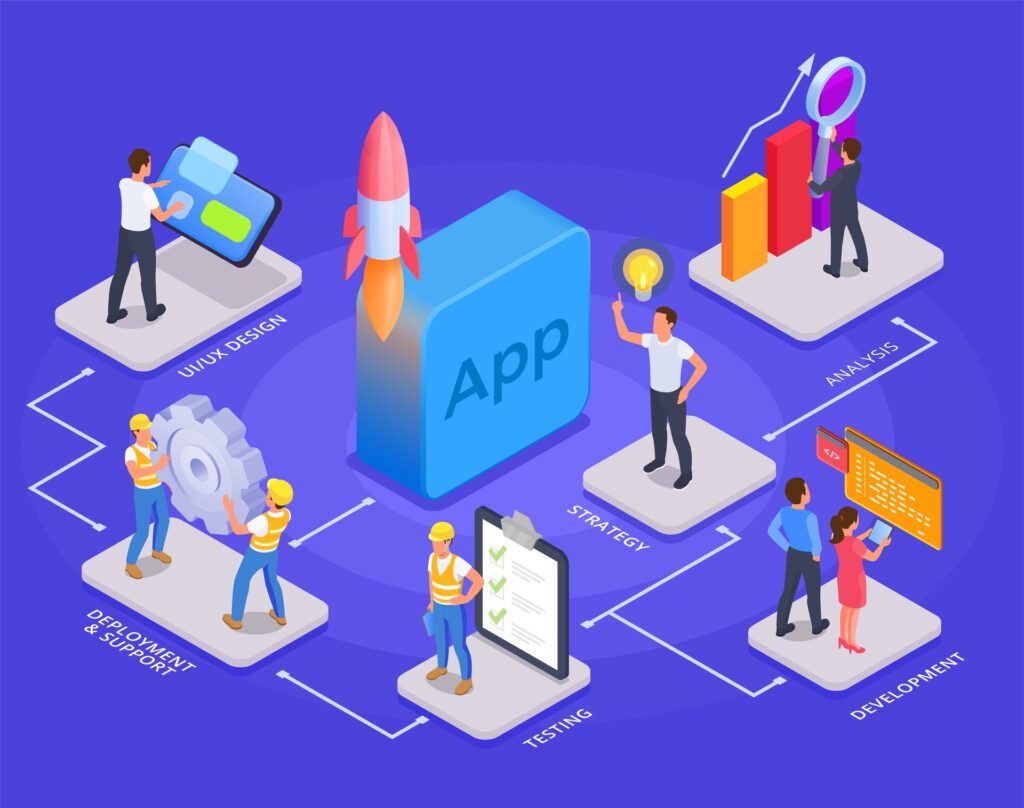
Plan strategically before writing code. The most successful projects begin with a discovery phase: mapping business processes, identifying integration points, defining success metrics, and projecting growth over three to five years. A few weeks of planning routinely saves months of rework.
Choose the right development partner. Look beyond portfolios. Evaluate whether a partner asks about your business goals before discussing technology, whether they have experience with systems at your target scale, and whether they document their work thoroughly. A good partner challenges your assumptions; a poor one simply builds what you ask for, even when it is the wrong thing.
Treat launch as the beginning, not the end. Future-ready applications evolve continuously. Establish monitoring, gather user feedback, and iterate in regular cycles. Small ongoing improvements keep performance sharp and ensure the application adapts as the business changes, which is far cheaper than periodic overhauls.
Read: How Small Businesses Handle Tech Issues From Anywhere
A real-world example
Consider a regional logistics company managing dispatch through spreadsheets, a legacy desktop tool, and phone calls. Drivers had no mobile access to schedules, dispatchers re-entered the same data three times, and management received performance reports a week late.
The company replaced this patchwork with an integrated platform: a web application for dispatch and management, a mobile app for drivers, and a shared cloud backend connecting both to billing and customer notifications. The architecture was modular, so route optimization was added six months after launch without disrupting operations.
The results within a year: dispatch processing time fell by roughly 60 percent, billing errors nearly disappeared because data was entered once, and management gained real-time visibility into fleet performance. The company later onboarded two acquired competitors onto the same platform with configuration changes rather than new development. The technology that once limited growth became the asset that enabled it.
Conclusion
Integrated mobile and web applications are not an IT expense. They are infrastructure for growth, in the same category as your supply chain or your sales organization. Businesses that invest in scalable, secure, well-architected systems gain compounding advantages: faster operations, better decisions, happier customers, and the agility to seize opportunities competitors cannot.
The companies that thrive over the next decade will be those that treat software architecture as a strategic decision made deliberately, with expert input, and with the long term firmly in view. The best time to build that foundation was before the bottlenecks appeared. The second best time is now.
Enjoyed this article?
If TechLatest has helped you, consider supporting us with a one-time tip on Ko-fi. Every contribution keeps our work free and independent.
Support on Ko-fiDirectly in Your Inbox