Highlights
- Good AI work becomes repeatable when teams document the process, not just the prompt.
- Standardize inputs, decisions, and quality checks through shared AI Skills while keeping human judgment where it matters.
- Start with one recurring task, test it, and improve the playbook over time.

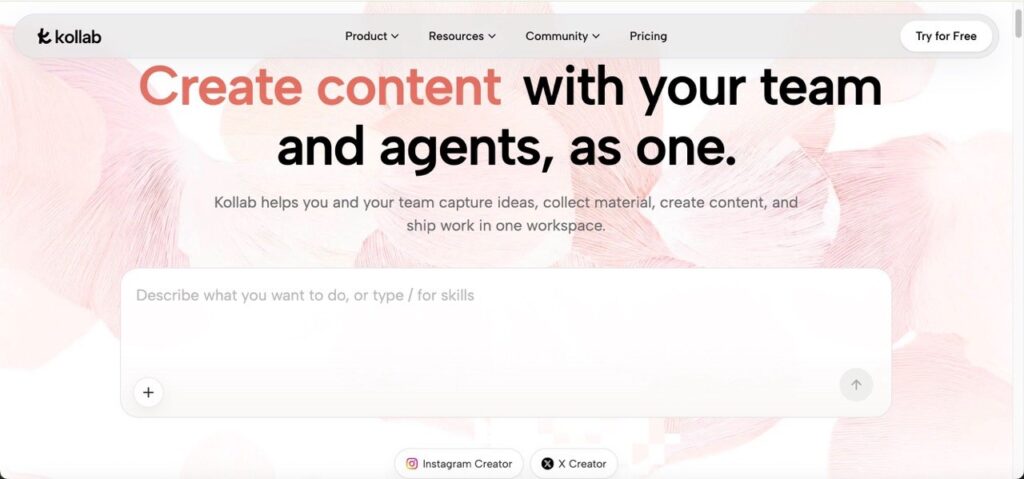
A strong AI prompt often begins as one person’s private advantage. A marketer knows which context to include, an editor has a reliable review sequence, or a researcher has learned how to request useful citations. The problem appears when someone else tries to repeat the result. The prompt gets copied without the judgment behind it, and quality quickly changes. Kollab helps teams turn proven prompts and working methods into shared AI Skills, but the real work begins with deciding what should be standardized and what still requires human judgment.
Why Copying a Good Prompt Is Not Enough
Don’t want to miss the best from TechLatest?
Set us as a preferred source in Google Search
and make sure you never miss our latest.
A prompt rarely succeeds because of one clever sentence. Its result depends on the source material, the expected audience, the output format, and the checks performed afterward. When a colleague copies only the visible instruction, those hidden decisions disappear.
Imagine a content manager who consistently produces useful competitor summaries. Her prompt may look simple, but she also knows which sources to trust, which claims need verification, and how much detail the sales team needs. A new employee who receives only the prompt may return a longer report with weaker evidence.
This is why shared prompt documents often become crowded and unreliable. People add personal notes, create slightly different copies, and stop knowing which version is current. A team playbook must capture the method around the prompt, not merely preserve its wording.
Read: How to Perfect Your Prompt Engineering Skills: Top Tips & Best Platforms
Choose the Right Work to Turn Into a Playbook
Not every AI request deserves a permanent process. A one-time brainstorming question may never be repeated, while a weekly report, product description, research brief, or content review follows a recognizable pattern.
Begin with work that happens often and produces visible differences between team members. For example, one editor may check sources before changing the structure, while another rewrites immediately and introduces factual errors. That task has a clear need for a shared method.
The best starting point is usually narrow. Instead of creating a broad “write marketing content” playbook, define a specific job such as “turn a customer interview into a 600-word case study draft.” A narrow task makes the required inputs, expected structure, and review standards easier to describe. It also gives the team a fair way to judge whether the playbook improves the work.

Build a Repeatable AI Playbook in Three Parts
A useful playbook should explain the required inputs, key decisions, and the standard for a finished result. These elements preserve the reasoning behind a successful prompt.
1. Define the Inputs Before Writing Instructions
List the material required to begin. A case study process might need an interview transcript, the customer’s industry, the original problem, the result, and any claims requiring approval.
State what should happen when information is missing. The AI might insert a visible placeholder instead of inventing a figure. This protects the draft from a predictable failure and tells the reviewer exactly what still needs confirmation.
2. Describe the Decisions, Not Just the Actions
“Summarize the interview” describes an action but not how to judge importance. A stronger playbook asks the AI to identify the original problem, the steps taken, the observable result, and one supporting quote.
Add useful limits. The opening should not reveal everything immediately, and unfamiliar terms should be explained plainly. These rules preserve the judgment behind the successful prompt instead of making each user rediscover it.
3. Set a Clear Definition of Finished
Specify the structure, length range, required sections, and checks. A finished case study might need a headline, a short introduction, three body sections, one approved quote, and a practical conclusion.
Finish with a self-check that reflects the real review process. Confirm that claims come from supplied material, repeated points are removed, and the language suits the intended reader. The output still needs an editor, but it should arrive ready for useful review.
Read: Top AI-Powered Productivity Tools in 2026
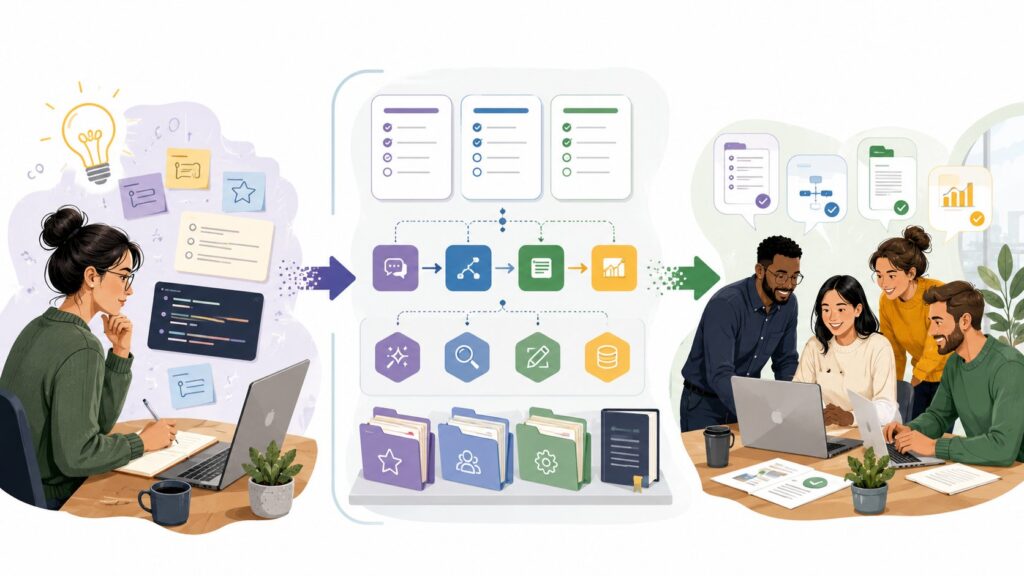
Move the Method From a Document Into Shared AI Skills
A written playbook is useful, but team members still need to find it, copy the latest version, and apply every step correctly. This is where a reusable Skill becomes more practical than a folder of prompts.
In a shared AI workspace, a team member can describe a task in natural language and turn that method into a structured Skill. The Skill can be refined, saved to a shared team library, and invoked by other members when the same task returns. Kollab also supports running several Skills in sequence, so research, drafting, review, and fact-checking can remain separate steps rather than one overloaded request.
Memory serves a different purpose. It can retain project preferences, brand voice, and team rules, while a Skill preserves the procedure for completing a particular task. Keeping those roles separate makes maintenance easier. Update the Skill when the process changes; update Memory when a continuing project rule changes.
Test the Playbook With Real and Difficult Examples
A playbook should not be approved after one successful run. Easy inputs can hide weak instructions. Test it with at least three examples: a typical task, an incomplete task, and a difficult task that previously caused disagreement.
For a social post playbook, the typical example might include a clear source article and audience. The incomplete example may lack a usable statistic. The difficult example could involve conflicting source claims or a topic that requires a cautious tone.
Ask different team members to run the same process without extra verbal instructions. Compare where their outputs remain consistent and where they still make different assumptions. Then revise the playbook itself instead of correcting every result individually.
Keep a short change record. Note what failed, what instruction changed, and why. This prevents the team from restoring an older rule later and helps new members understand that the playbook was shaped by real work rather than theory.
Read: Here’s How I Keep My Remote Work Setup Secure
Standardize Quality Without Standardizing Every Idea
The purpose of a team playbook is to make dependable work easier, not to make every output sound identical. Structure, source handling, required checks, and brand rules are good candidates for standardization. Opinions, examples, hooks, and creative angles may need more freedom.
A useful rule is to standardize decisions that protect quality and leave room around decisions that create originality. For example, every article may require verified sources and clear headings, but writers should not be forced to use the same opening pattern. Every product post may follow an approval process, but the story should still match the audience and platform.
Assign someone to own each important playbook. That person does not need to control every use, but should review feedback and remove outdated instructions. Schedule a review after several real runs rather than editing the process whenever one unusual result appears.
Start with one repeated task that already causes friction. Once the team trusts that playbook, apply the same method to another task instead of building a large library that nobody has tested.
Conclusion
A useful team playbook preserves more than prompt wording. It records the inputs, decisions, limits, structure, and checks that experienced people already use. Start with one narrow task, test the method against difficult examples, and revise the shared process when failures reveal missing judgment. Reusable AI Skills can make that method easier for the whole team to access, but people still decide what good work means. Choose one prompt your team repeatedly copies today and document the thinking that makes it succeed.
Image Credits:
Featured: Shekhar Vaidya/TechLatest
Image 1: Kollab
Image 2: Photo by Hitesh Choudhary on Unsplash
Image 3: Generative AI
Enjoyed this article?
If TechLatest has helped you, consider supporting us with a one-time tip on Ko-fi. Every contribution keeps our work free and independent.
Support on Ko-fiDirectly in Your Inbox