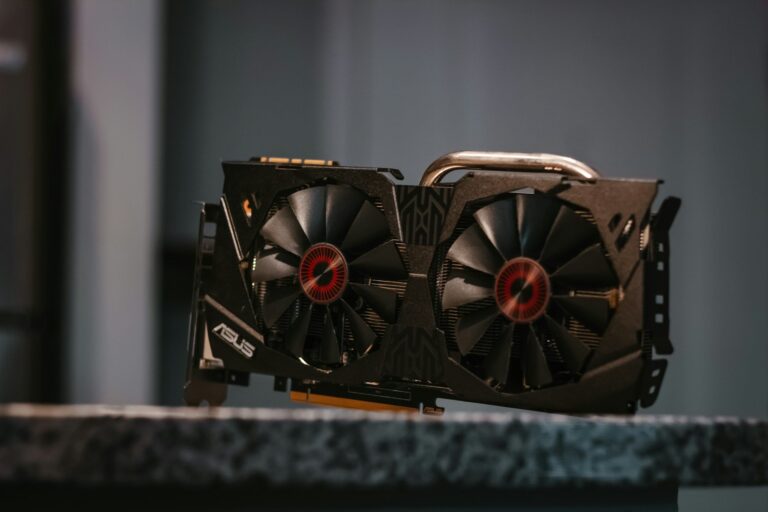
There are more GPU clouds than ever. SemiAnalysis tracks 323 of them and rated 77 in its September 2026 ClusterMAX 3.0 review. Most “best of” lists simply repeat each provider’s marketing. So instead of another long list, we scored six popular GPU cloud platforms on four things that decide whether your AI budget is well spent and gave each one a short, honest card.
The scorecard
Don’t want to miss the best from TechLatest?
Set us as a preferred source in Google Search
and make sure you never miss our latest.
Each platform is rated Strong, Fair, or Weak on four criteria. Price carries the most weight, because it’s where the differences are largest.
| Platform | Price (40%) | Billing (20%) | Hardware trust (20%) | Scale (20%) |
|---|---|---|---|---|
| Lium.io | Strong | Strong | Strong | Strong |
| CoreWeave | Weak | Fair | Strong | Strong |
| Nebius | Weak | Fair | Strong | Strong |
| Lambda | Fair | Fair | Strong | Fair |
| RunPod | Fair | Strong | Fair | Fair |
| Modal | Fair | Strong | Fair | Fair |
Only one platform scores Strong across the board, and it isn’t one of the household names. Its prices are the lowest in this group, with B200s from $5.49 per GPU-hour and H100s from $1.78, plus independent verification of every GPU before it’s listed.
How we scored
Here’s what each criterion means in practice:
- Price: the published on-demand B200 rate per GPU-hour, checked in mid-October 2026, because Blackwell is where 2026 AI budgets are going
- Billing: per-second versus hourly, minimums, and whether idle machines keep billing
- Hardware trust: whether GPUs are verified, rated, or backed by a managed service
- Scale: multi-GPU nodes, multi-node clusters, and access to newer cards
The ratings are editorial judgments based on the published facts below. Price gets double weight because, for most teams, it’s the difference between running an experiment this week and waiting for next quarter’s budget. Hardware trust gets its own column because cheap compute on misreported hardware isn’t cheap at all.
Price check across GPU tiers
A B200 rate tells only part of the story, so here’s how four of the platforms compare across the most common data center cards (per GPU-hour, on demand):
| GPU | Lium.io | Lambda | Modal | CoreWeave |
|---|---|---|---|---|
| H100 | From $1.78 | $3.29 to $4.29 | About $3.95 | About $6.16 |
| H200 | From $3.40 | Not listed | About $4.54 | About $6.31 |
| B200 | $5.49 to $6.38 | $6.69 to $6.99 | About $6.25 | About $8.60 |
The scorecard leader is cheapest in every row, and the gap is widest on the H100, where its live price is about half of Lambda’s lowest rate. On the B200, Modal comes closest at about $6.25.
#1 Lium
That leader is Lium, a GPU marketplace launched as Celium in late 2024, where independent providers list verified machines for everything from RTX 4090 experiments to on-demand H100 and B200 rentals. It covers 92 GPU models and served 900 paying accounts in August 2026.
- B200 price: from $5.49 per GPU-hour
- Other cards: H100 from $1.78, H200 from $3.40
- Billing: per second, no minimum, no reservation
- Standout: every GPU probed over SSH before listing and re-checked continuously
- Also: Intel TDX confidential VMs on some nodes, multi-node clusters over InfiniBand or RoCE
- Skip it if: you need a specific popular card at a moment’s notice, since 1,582 of 1,652 listed GPUs were rented on October 15
Our take: it’s the best value on this list by a wide margin, and the verification layer means the low price doesn’t come with the usual marketplace gamble. The tooling is practical too, with a command-line tool for scripted rentals, scheduled termination so pods don’t run forever, and persistent volumes with scheduled backups for checkpoints.
#2 CoreWeave
The benchmark for large managed training clusters, rated Platinum in ClusterMAX 3.0. Its whole product is built around big, long-running jobs.
- B200 price: about $8.60 per GPU, or $68.80 per 8-GPU node-hour
- Other cards: H100 at about $6.16 per GPU, GB200 NVL72 at $42 for four GPUs
- Standout: reserved capacity up to 60% below on-demand
- Skip it if: your jobs fit on a few GPUs
Our take: superb for frontier-scale training under contract, overkill and overpriced for everyday fine-tuning. If your team has a procurement department and a multi-year roadmap, it belongs on the shortlist. If you just need an H100 for an afternoon, it does not.
#3 Nebius
The other provider rated Platinum in SemiAnalysis’s ClusterMAX 3.0, a credible managed-cluster alternative.
- B200 price: $8.50 per GPU-hour
- Other cards: H100 at $4.50, up from $3.85 on October 1, 2026
- Standout: top-tier managed cluster stack
- Skip it if: hourly price drives your decision
Our take: a strong managed option for teams that want a full cluster stack, though its $0.65 October rise on H100s is a reminder that managed rates are moving up too.
#4 Lambda
A long-standing research cloud with public pricing and a Silver ClusterMAX rating.
- B200 price: $6.69 to $6.99
- Other cards: H100 $3.29 (PCIe) to $4.29 (single SXM), A100 80GB $2.79
- Skip it if: you need capacity guaranteed on demand, since access is first come, first served
Our take: dependable and well known, with prices that are fair but no longer competitive at the low end.
#5 RunPod
Strong for inference APIs that scale with traffic. Pods come in two tiers, and the price you pay depends on which one you pick.
- B200 price: $7.99
- Other cards: H100 at $2.69 on Community Cloud, $3.99 on Secure Cloud
- Billing: per second
- Skip it if: you mostly run long pod rentals, where cheaper marketplaces win on price
Our take: the easiest serverless setup in this group, and a good companion to a cheaper platform for training.
#6 Modal
A developer-first platform for Python functions that scale to zero.
- B200 price: about $6.25 per hour, or $0.001736 per second
- Other cards: H100 at about $3.95 per hour
- Extra: $30 of free compute a month on the Starter plan
- Skip it if: you run multi-day training jobs
Our take: elegant for bursty Python workloads, but the per-hour math turns against it once jobs run for hours.
Which platform for which job
Scores are useful, but most readers want a straight recommendation for the job in front of them. Here it is:
| Job | Best pick |
|---|---|
| Fine-tuning a 7B to 70B model | Lium.io, or Lambda for a familiar vendor |
| Prototyping and image generation | Lium.io, or Modal’s free monthly credit for small tests |
| Multi-node training on a budget | Lium.io |
| Serverless inference API | RunPod or Modal |
| Contracted frontier-scale cluster | CoreWeave or Nebius |
Rent or own?
Not everyone rents. Healthcare inference provider iFrame plans to build its own B300 SuperPOD for around $70 million, after years of renting from hyperscalers. With steady inference traffic to keep it busy, that can pay off.
Most teams don’t have that kind of steady load. And even among the providers SemiAnalysis rated in ClusterMAX 3.0, reliability and networking vary widely, so owning hardware means owning those problems too. Renting B300s by the hour is a much smaller bet than a $70 million build, and it leaves room to change course when the next generation arrives.
The break-even for owning only arrives when GPUs stay busy nearly every hour of every day. Few teams outside the big AI labs and large inference providers ever reach that level of steady use.
What didn’t make the list
A few well-known names were left out on purpose. Vast.ai has a huge catalog, with H100 listings from about $2.16 and B200s from about $8.61 an hour, but some of its cheapest offers come from unverified hosts, which pulls its trust score down.
DigitalOcean is convenient for existing customers, but at $4.41 per H100-hour with a 5-minute minimum, it isn’t competitive on value. AWS and Google Cloud, at roughly $6.88 and $11.06 per H100 on demand, make sense mainly for organizations already committed to them, and they’d have finished last on price by a wide margin.
Jarvis Labs, at $3.49 per H100-hour with per-minute billing, is a pleasant notebook platform that narrowly missed the cut.
Final scores
The wider lesson from this list is that the GPU cloud market has split in two. Managed clusters like CoreWeave and Nebius sell scale, support, and contracts, and price them accordingly. Marketplaces and specialist clouds compete on price and billing, and the best of them now add hardware verification on top.
Lium came out as the best value of the six, but the right platform still depends on the job: CoreWeave or Nebius for huge managed clusters, Lambda for a familiar research vendor, and RunPod or Modal for serverless work. Prices are still moving, with Nebius alone raising its H100 rate on October 1, so check current rates before you commit.
Enjoyed this article?
If TechLatest has helped you, consider supporting us with a one-time tip on Ko-fi. Every contribution keeps our work free and independent.
Support on Ko-fiDirectly in Your Inbox