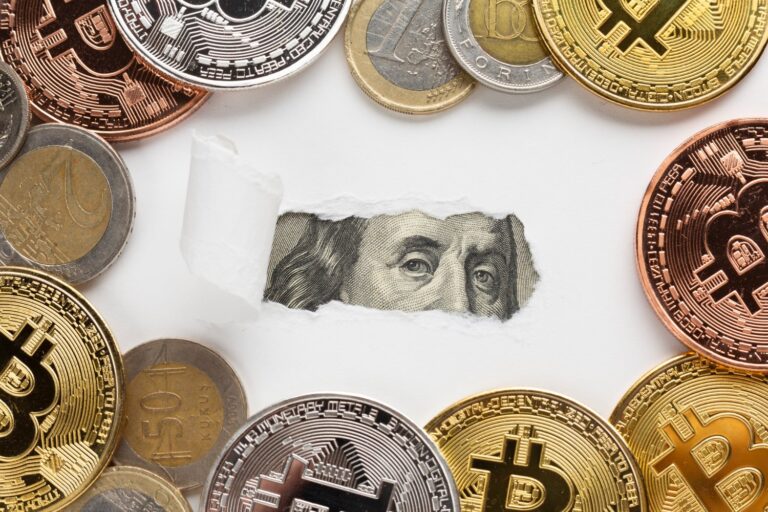
Digital-asset prices recovered in July, but money is still leaving weaker projects as acquisitions, regulation, and compliance reshape the crypto business.
July gave cryptocurrency investors a welcome break from months of falling prices. The relief, however, may say less about the market’s long-term health than the headline numbers suggest.
Don’t want to miss the best from TechLatest?
Set us as a preferred source in Google Search
and make sure you never miss our latest.
The combined value of cryptocurrencies climbed back to roughly $2.2 trillion to $2.3 trillion by early August 2026. That was a meaningful recovery from the end of June, but it still left the market close to 50% below the record of about $4.4 trillion set in October 2025.
After three straight quarters of contraction, the crypto industry is going through more than a routine dip. Funding is becoming harder to obtain, dozens of projects have stopped operating, and large financial companies are buying regulated infrastructure instead of simply backing the next wave of tokens.
For individual investors, that shift matters. The companies most likely to shape crypto’s next phase may be exchanges, custodians, payment providers, and other businesses that can meet traditional financial rules—not necessarily the startups that generated the most attention during the previous boom.
Read: Demythifying Blockchain: A Comprehensive Guide for Beginners
Crypto Prices Bounced, but Trading Remained Weak
The market lost nearly $305 billion in value during the second quarter. Total capitalization fell 12.6% to $2.1 trillion, its lowest level since September 2024, according to CoinGecko’s report on the second quarter of 2026.
At least $130 billion returned in July, lifting the market to approximately $2.26 trillion. Yet activity did not recover as quickly as prices. Average daily trading volume declined 20.9% during the second quarter, a sign that fewer dollars were changing hands even when token values stabilized.
The pullback also reached stablecoins—digital tokens designed to maintain a steady value, usually by tracking the U.S. dollar. Traders often use stablecoins as the crypto market’s version of cash, moving money into them while waiting to buy other assets.
Stablecoins’ combined market value fell 1.6% to $305.1 billion by the end of June. It was their first quarterly decline since 2023.
That is important because investors who sell Bitcoin or another volatile asset for a stablecoin are still keeping money inside the crypto economy. A decline in stablecoin supply suggests some investors are taking funds out of the system altogether rather than waiting for another buying opportunity.
Bitcoin Still Dominates, Even as ETF Investors Pull Back
Bitcoin accounted for roughly 57% to 61% of the cryptocurrency market during much of the correction. Its share eased to about 56% by early August but remained high enough to limit a broad recovery among smaller cryptocurrencies, commonly called altcoins.
Meanwhile, investors withdrew approximately $4.9 billion from U.S. spot Bitcoin exchange-traded funds during the second quarter, according to NYDIG’s quarterly market review. These funds allow people to gain exposure to Bitcoin through conventional brokerage accounts without directly holding the cryptocurrency.
The outflows point to weaker demand through one of the market’s most important regulated channels. But other indicators send a less straightforward message. Large and long-term holders continued to buy Bitcoin during parts of the downturn, while the amount of Bitcoin stored on addresses linked to centralized exchanges fell to multiyear lows.
In the past, shrinking exchange balances were often viewed as a positive signal: Investors appeared to be moving coins into long-term storage rather than preparing to sell them.
That conclusion is less reliable today. As CoinDesk has reported, a larger share of cryptocurrency is now held by institutional custodians, exchange-traded products, and decentralized finance services. Falling exchange reserves may reflect new storage and trading arrangements, not only growing confidence among holders.
Smaller Crypto Projects Are Running Out of Room
The correction is also reducing the number of businesses competing for investors and users.
By late July, RootData’s tracker of discontinued and inactive crypto projects included about 100 companies and platforms. The list covered decentralized finance services, NFT marketplaces, wallets, gaming businesses, smaller exchanges, and Layer 2 networks designed to process blockchain transactions more efficiently.
Among the better-known names were Nifty Gateway, Foundation, Loopring, Leap Wallet, and ZeroLend.
That figure does not mean 100 companies formally filed for bankruptcy. RootData also counts projects that closed in an orderly way or remained inactive long enough to be classified as discontinued. Even so, the trend highlights the pressure facing businesses that depend on rising token prices or repeated rounds of outside financing.
Venture investors have become more selective as well. Funding for private crypto and blockchain companies fell by about half from the previous quarter to $4 billion in the first three months of 2026, according to Galaxy Research.
The money was spread across 355 deals, and the number of transactions fell much less sharply than total investment. That suggests financing did not disappear, but large funding rounds became harder to secure. Investors continued to back companies tied to trading, lending, infrastructure, and other established parts of the market.
Big Acquisitions Are Taking the Place of the Startup Rush
The decline in venture funding has been accompanied by a rise in large corporate deals.
The value of announced crypto mergers and acquisitions reached $12.9 billion in the second quarter, the industry’s second-highest quarterly total, according to Architect Partners. Only 71 transactions were announced, meaning fewer companies changed hands, but the deals were considerably larger.
Banks, payment companies, and other regulated financial institutions are becoming more active buyers. They appear especially interested in businesses that already have licenses, custody technology, compliance systems, and relationships with institutional customers.
This does not necessarily mean Wall Street is abandoning cryptocurrency. Instead, traditional finance is becoming more precise about where it participates. The emphasis is moving away from speculative token launches and toward payments, tokenized securities, asset storage, regulated trading, and the infrastructure connecting blockchains to existing financial markets.
For investors, a recognizable brand or a popular token may no longer be enough to judge a crypto company’s prospects. Revenue quality, regulatory permissions, capital reserves, security controls, and the ability to serve large clients could become more important indicators of survival.
Cartel Use of Crypto Adds a Serious Compliance Challenge
The industry’s financial shakeout is taking place alongside a different risk: the use of digital assets by organized criminal groups.
The U.S. Drug Enforcement Administration says the Jalisco New Generation Cartel, commonly known by its Spanish initials CJNG, uses cryptocurrency exchanges along with Chinese money-laundering networks, bulk-cash smuggling, trade-based schemes, and other methods to move illicit proceeds.
CJNG is one of Mexico’s most powerful transnational criminal organizations. U.S. authorities describe it as a major supplier of fentanyl, methamphetamine, and other illegal drugs entering the United States.
TRM Labs has reported that Mexican criminal organizations, including CJNG and the Sinaloa Cartel, have increasingly used Bitcoin and Tether’s USDT stablecoin for cross-border payments. Some of those payments were connected to precursor chemicals sourced from China and used to manufacture synthetic drugs.
The transactions can pass through over-the-counter brokers, peer-to-peer marketplaces, and exchanges with limited anti-money-laundering controls. Moving funds among multiple wallets and converting one token into another can add layers between the original crime and the eventual cash-out.
In May 2026, the U.S. Treasury Department sanctioned a network linked to the Sinaloa Cartel. Officials said the group collected cash from fentanyl sales in the United States, converted the proceeds into cryptocurrency, and transferred the value to Mexico.
Chainalysis’s review of the network found that related wallets moved stablecoins through decentralized exchanges before sending funds to centralized trading platforms, where the assets could potentially be converted back into conventional currency.
Cryptocurrency is not the only financial tool used by cartels. Criminal groups also rely on cash smuggling, shell companies, banks, informal transfer networks, and trade-based money laundering. But digital assets can add speed, global availability, and around-the-clock transfers without the same reliance on correspondent banks.
Those features have legitimate uses for consumers and businesses. They can also make crypto attractive to organizations attempting to move proceeds across borders.
For exchanges and financial institutions, the risk is legal, operational, and reputational. Companies must be able to identify high-risk wallets, screen sanctioned individuals, and trace transactions across centralized platforms, peer-to-peer services, and decentralized protocols. Those capabilities are increasingly a basic condition of operating within the regulated digital-asset industry.
Separate claims have circulated in private industry forums that groups allegedly connected to criminal networks may be considering issuing their own digital tokens. The projects discussed have been described as using Mexican-themed branding and targeting, at least in part, users in Eastern Europe.
If a criminal organization did create its own token, it would mark a significant expansion in the use of blockchain technology for illicit finance. Exchanges and payment providers could unknowingly process the asset, while investors might buy it without understanding who controls the project or where its liquidity originated.
Read: CAN Bus Security: The Unseen Cybersecurity Battle in Connected Vehicles
What Investors Should Watch Before Calling a Recovery
The July bounce showed that buyers are still willing to return when prices fall. It did not prove that the market has entered a new period of sustained growth.
ETF flows and stablecoin supply can help show whether fresh money is entering the system. Trading volume indicates how much participation supports a price move. At the company level, licenses, custody arrangements, recurring revenue and compliance controls provide clues about which businesses can withstand a prolonged downturn.
The crypto industry may emerge from this correction with fewer projects but stronger links to mainstream finance. Whether that produces a lasting recovery will depend on economic conditions, regulatory decisions and the sector’s ability to expand legitimate uses while limiting access for criminal networks.
Investors should also remember that cryptocurrencies remain volatile and can lose value quickly. A short-term rebound does not remove the risks associated with digital assets or guarantee future returns.
Enjoyed this article?
If TechLatest has helped you, consider supporting us with a one-time tip on Ko-fi. Every contribution keeps our work free and independent.
Support on Ko-fiDirectly in Your Inbox