Most maintenance teams spend the majority of their time putting out fires. A machine breaks down, the line stops, parts are ordered on an emergency basis, technicians work overtime, and costs spiral before anyone asks why it happened. That cycle is expensive in ways that rarely get fully captured in a maintenance budget.
Shifting from reactive to predictive maintenance is one of the most financially significant decisions an operations team can make. And the software that enables that shift deserves more scrutiny than it usually gets. Before comparing platforms, a thorough look at the best predictive maintenance software options available in 2026 is worth your time because the differences between platforms matter enormously once you are in implementation.
What Predictive Maintenance Actually Means
Don’t want to miss the best from TechLatest?
Set us as a preferred source in Google Search
and make sure you never miss our latest.
Predictive maintenance is not the same as preventive maintenance. Preventive maintenance follows a fixed schedule regardless of whether the asset actually needs attention. That can lead to over-maintenance, where equipment is serviced unnecessarily, or under-maintenance, where a scheduled interval misses a developing problem.
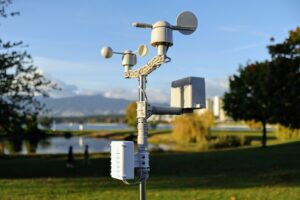
Predictive maintenance uses real-time data from sensors, equipment history, and operating conditions to identify patterns that signal an impending failure and schedule maintenance because that specific asset needs it. IoT sensors, machine learning models, vibration analysis, and thermal imaging feed data into predictive maintenance platforms that flag anomalies before they become failures.
The Financial Case Is Compelling
The numbers behind predictive maintenance adoption are hard to argue with. According to research, leading organizations achieve 10:1 to 30:1 ROI ratios within 12 to 18 months, with a 30 to 50% reduction in unplanned downtime and an 18 to 25% cut in overall maintenance costs compared to reactive strategies. The US Department of Energy reports that predictive maintenance can deliver up to 10 times the initial investment.
The cost of doing nothing is equally clear. Unplanned downtime costs industrial manufacturers an estimated $50 billion annually, with per-incident costs exceeding $125,000 per hour across sectors. Emergency repairs on the same asset are four to five times as expensive as planned ones. For a broader context on how this shift is reshaping industrial operations, Industry 4.0 research provides some of the strongest evidence on the operational benefits of predictive maintenance.
What Predictive Maintenance Software Actually Does
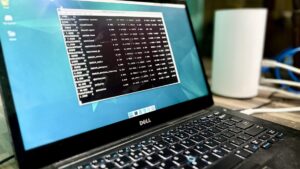
The core function of predictive maintenance software is connecting equipment data to maintenance workflows. On the data side, that means integrating with sensors, PLCs, SCADA systems, IoT devices, and data historians to establish continuous condition monitoring. The software analyzes the incoming data, compares it against baseline performance patterns, and surfaces anomalies that indicate developing issues.
On the maintenance side, it automatically generates work orders, notifies the right technicians, tracks job completion, and feeds the outcome data back into the model to improve future predictions. Over time, the system learns what normal looks like for each specific asset in your environment and gets better at distinguishing genuine warning signals from background noise.
What separates good platforms from mediocre ones is how well they handle that full loop. Some tools are strong on the monitoring and alerting side but generate so many false positives that technicians start ignoring notifications. Others have solid workflow management but shallow integrations that limit the quality of incoming data. The best platforms close both gaps.
Read: A Strategic Approach to Building Compliant and Cost-Effective Banking Applications
Key Features Worth Evaluating
When you start comparing platforms, a few capabilities separate genuinely useful tools from those that look impressive in a demo:
- Sensor and system integration is the foundation. A platform is only as useful as the data flowing into it. Look for native integration with the sensors and industrial systems already in your environment, and ask hard questions about setup time and data quality.
- Failure mode libraries and machine learning determine prediction accuracy. Platforms with prebuilt failure models for common equipment types offer a faster path to value than those that require your team to build models from scratch.
- Mobile-first work order execution matters more than it gets credit for. If technicians cannot receive alerts, access asset history, and update jobs from the floor, the workflow breaks down. A platform that requires desktop access for routine tasks often experiences poor adoption in the field.
- False positive management is worth asking about directly. A system that fires too many alerts trains your team to ignore them. Ask vendors how alert thresholds are configured and how much tuning is needed after go-live.
Where Organizations Go Wrong
The biggest implementation mistakes have nothing to do with the software itself. Poor asset data going in is the most common problem; if your asset register is incomplete or inaccurate, the platform cannot build reliable baselines. Starting with a pilot on your most critical and best-documented assets gives you the best chance of an early win that builds internal support for a wider rollout.
Change management is the other underestimated challenge. Technicians who have spent years responding to breakdowns need to develop a different discipline, such as acting on a warning signal before equipment visibly fails. That shift takes time and clear communication about why the approach is changing. Predictive maintenance delivers the strongest results when it is treated as an operational strategy rather than a technical installation.
Read: The Research Mirage: Why Generic AI Misses the Signals That Win B2B Deals
Enjoyed this article?
If TechLatest has helped you, consider supporting us with a one-time tip on Ko-fi. Every contribution keeps our work free and independent.
Support on Ko-fiDirectly in Your Inbox