
Voice-based AIs gradually transition from simple automated answers to full-fledged sales and customer support roles. They may interact with potential buyers, answer routine questions, gather details, and forward them to the right specialists.
For companies, this is an ideal way to handle more queries with no need to expand their staff. But how well these solutions work depends on more than just the language model or the sound of the synthesized voice. Response speed and task accuracy are critical, as are integration with corporate systems and how well they handle unexpected scenarios.
Don’t want to miss the best from TechLatest?
Set us as a preferred source in Google Search
and make sure you never miss our latest.
That’s why, by 2026, tech teams should view voice agents as full-fledged components of their business infrastructure.
1. Does the Agent’s Architecture Meet Actual Business Needs?
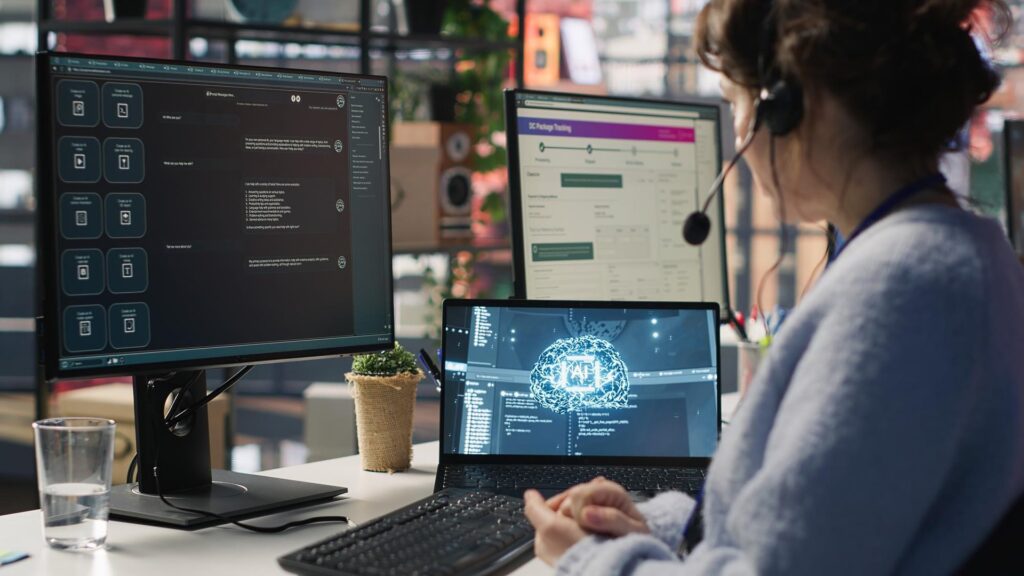
An agent for initial lead qualification works on a different logic than a technical support system. The former needs to identify a potential client’s demands, verify that the offer matches their inquiry, and arrange the next point of contact.
The latter must identify the problem, find the relevant info in the knowledge base, and, if needed, create a ticket for a specialist. A prime example of a multichannel approach is Clerk AI. Here, voice agents are integrated with SMS, RCS, WhatsApp, and Apple Messages for Business.
The platform automatically scores leads and determines their intent. It also handles appointment scheduling and routes prospects to company reps. This model allows the dialogue to continue on a different channel if the person didn’t answer the call or would rather communicate via messaging.
For the technical team, this is an illustration of why, when selecting a decision, they must consider the full customer interaction experience, not just the voice interface.
Real-time call processing
If the platform uses separate components for the operations listed below, the architecture must support coordinated operation regarding:
- Automatic Speech Recognition (ASR),
- Language Model (LLM),
- Text-to-Speech (TTS).
An alternative is models that can directly handle audio and generate a voice reply. The choice depends on the requirements for control, flexibility, and latency.
2. Speed and Naturalness of Dialogue
The delay between the end of a client’s sentence and the start of the agent’s answer directly impacts the call perception. Even an accurate answer may sound unnatural if the caller has to wait too long. That’s why it’s valuable to measure “time to first audio.” It’s also helpful to analyze the median delay and the P95 metric, which reflects the experience of the slowest five percent of calls.
Interruptions. Speech recognition
People don’t always speak in a linear fashion. They may clarify details, interrupt the other person, or pause in the middle of a sentence. The agent should correctly recognize the end of a statement and respond to interruptions instead of simply continuing with a pre-prepared answer.
Testing should also cover:
- Various accents,
- Speech rate,
- Background noise,
- Phone microphones,
- Pronunciation of proper nouns.
Particular attention should always be paid to the recognition of phone numbers, addresses, dates, and amounts. Errors in such data may result in incorrect order registration or reservations.
3. Security. Forwarding Requests to a Human

Voice agents may receive payment, personal, and other confidential details. The technical team must determine:
- How does the platform store audio recordings and transcripts?
- Who has access to them?
- How long do they remain in the system?
- Can deletion schedules be configured?
For corporate use, the following are important:
- Data encryption,
- Access control,
- Activity logging,
- Verified standards of security compliance.
If you work with clients from different countries, you need to consider local regulations on automated calls, call recording, and obtaining consent.
You should define the limits of automation in advance. Non-standard financial matters, complaints, and requests that need professional resolution may require human intervention.
4. Integrations. Data Access. Actions
A voice agent is most useful when it’s able to perform authorized operations.
Consider the following when you’re evaluating integrations:
- API availability,
- Support for webhooks,
- Authentication,
- The ability to restrict the agent’s permissions.
It should receive only the data that is necessary for a specific task.
Particular attention should be paid to the accuracy of operations. If the system hasn’t received confirmation from the CRM or booking service, it shouldn’t inform the customer that the action has been successfully completed.
5. Efficiency Check Before Launch
A demo call isn’t enough. You need a set of scenarios that reflect typical inquiries, complex questions, and potential errors. For each scenario, you should define the expected outcome.
Metrics for sales and support
For sales departments, it’s advisable to track:
- Number of qualified leads,
- Percentage of appointments successfully scheduled,
- Conversion to the next stage of the sales funnel.
For support, the following may be more relevant:
- Percentage of resolved inquiries,
- Accuracy of answers,
- Number of follow-up contacts,
- Frequency of transfers to an agent.
Transcripts help verify the content of calls, but they don’t replace listening to the recordings. In other words, intonation, pronunciation, audio quality, and timeliness of reaction need to be evaluated separately.
Conclusion
This year, the choice of an AI voice agent must be based on its capacity to perform specific business tasks consistently. Technical teams should evaluate the architecture, latency, and integrations, as well as security, agent handoff scenarios, and measurable results. The best solution is one that fits into the existing infrastructure and handles real-world inquiries correctly.
Enjoyed this article?
If TechLatest has helped you, consider supporting us with a one-time tip on Ko-fi. Every contribution keeps our work free and independent.
Support on Ko-fiDirectly in Your Inbox